
 Available in GB
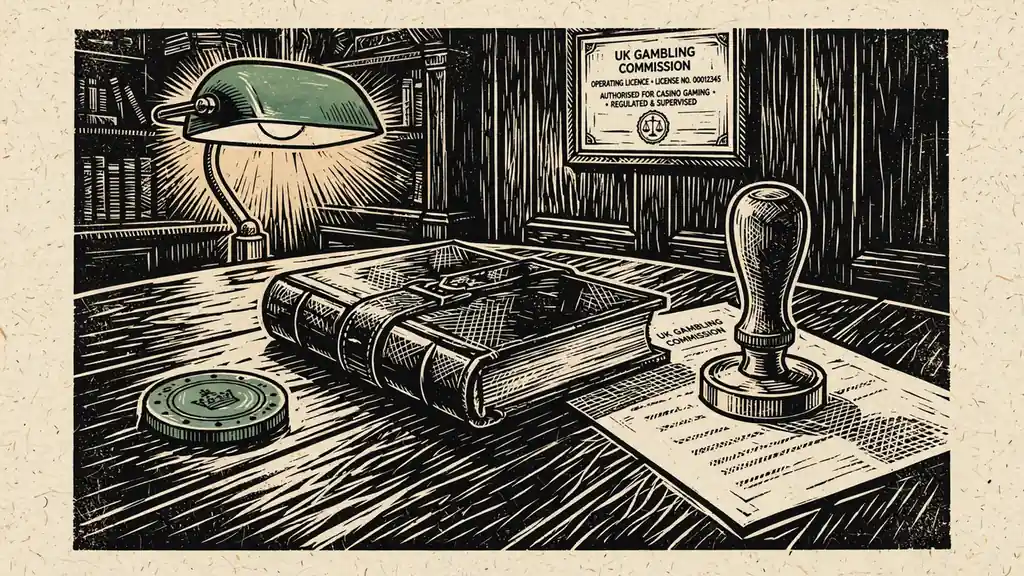
- What Makes a UK Casino Trustworthy in Practice
- Trust Is More Than a Licence Badge
- Playing for Real Money: Check the Rules Before You Deposit
- What Does “Trustworthy” Actually Mean in the UK?
- Choosing a Casino Without Treating “Best” as a Guarantee
- How to Read a Casino Review Critically
- A Simple Check Before You Sign Up
- Non-GAMSTOP Casinos and the Great Britain Rules
- Considering Bitcoin? Verify the Operator, Not the Pitch
- Ethereum Casinos: What You Can—and Can’t—Verify
A practical way to assess who runs a casino, what its licence tells you and which claims still need scrutiny.
What Makes a UK Casino Trustworthy in Practice
“Trustworthy” is a claim, not a feature you can take on trust. When I compare online casinos, I start by asking who runs the site and whether that operator is authorised to serve the market it is targeting. A polished design, familiar game titles or confident wording can make a site feel reassuring, but none of those things answers that basic question.
For customers in Great Britain, remote gambling businesses offering casino facilities need the relevant UK Gambling Commission licence, wherever the business itself is based. The Commission regulates remote gambling offered to consumers in Great Britain. So an operator cannot make its location elsewhere do the work of a UKGC Licence. What matters is whether it has the appropriate authority for the customers it serves.
That is the practical starting point for assessing trustworthy casino sites. It is not a promise that everything will go smoothly, or a guarantee about every decision an operator might make. It is a way to separate a claim that can be checked from a slogan designed to sound comforting.
Start with the operator, not the sales pitch
A casino brand and the business behind it are not always presented as the same thing. Before relying on statements about a site, identify the operator responsible for it and consider whether the licence applies to that business and its service for Great Britain. A licence badge on a page may be a useful signpost, but the claim should be capable of being checked against the regulator’s information.
I would not treat a site as trustworthy simply because it looks established, uses familiar language or appears prominently in an online list of trustworthy online casinos. Those things may help you find a site, but they do not establish that it is authorised for the market you are in. A recommendation is someone else’s judgement; regulatory status is a concrete point to verify.
The same goes for phrases such as “safe”, “trusted” or “recommended”. They may describe an editorial opinion or marketing message, rather than a regulatory fact. Read them as claims that need context. If you cannot work out which business operates the site, or what the claim is based on, pause before treating it as evidence.
Safe Online Casino UK: Check the Licence and Terms
Trust is a set of checks
When people ask what makes online casinos trustworthy, they are often looking for one decisive sign. In practice, trust is better treated as a series of checks. The first is whether the operator is properly licensed for the market it serves. Then consider whether the information the casino gives you is clear enough to understand before you make a decision.
That does not mean a site with a licence is flawless. A licence establishes an important regulatory connection; it does not turn every promotional claim into a fact or remove the need to use your own judgement. Nor does an appealing welcome offer, a long list of games or a familiar payment logo settle the question of whether the business is appropriately authorised.
I find it useful to separate three ideas: what the operator is required to have, what it says about itself, and what you can independently confirm. The first is about regulatory status. The second might include claims about service, offers or reputation. The third is where you test those claims rather than letting presentation stand in for proof. Keep them separate and the decision becomes less foggy.
What about trustworthy online slots?
The word “trustworthy” can also get attached to games, especially online slots. But a particular game title does not tell you whether the casino offering it is authorised to serve customers in Great Britain. Start with the operator. A game’s presence on a site is not a substitute for checking who is providing the gambling service.
Likewise, an operator’s licence should not be stretched into a claim that every game or every outcome is guaranteed to suit you. Those are different questions. For this first comparison, the useful point is narrower: establish that the business behind the casino has the relevant UKGC Licence for the market it serves, rather than relying on the site’s appearance or its game catalogue.
DO
- Identify the operator responsible for the site
- Check the regulator’s information to verify the licence
- Verify the business behind the brand
DON’T
- Rely on a polished design or familiar language
- Trust a recommendation or marketing slogan
- Assume a site is trustworthy because it appears in an online list
There is no honest shortcut from a search for the most trustworthy UK online casinos to a universal answer that fits every player. What you can do is apply the same basic standard to any candidate: identify the operator, check that it is authorised for Great Britain, and treat reputation language as something to weigh rather than proof. That gives you a sounder starting point than a list built around adjectives.
A trustworthy casino, in practice, is not one that asks you to believe it. It is one whose key claims you can test, beginning with the operator’s authority to offer remote gambling to customers in Great Britain. That is a modest first step, but an essential one. A badge alone is not enough.
Top online casinos in the UK
- x3betBonus: Welcome Pack 100% Up to £1.000 + 200 Free Spins · Payout speed: 1-3 business days
- Revery PlayBonus: 100% up to€1,000+ 100 FS · Payout speed: 1-3 business days
- DieselwinBonus: Welcome Pack 250% up to £4000 + 200 FS · Payout speed: 1-3 business days
- SlotoSportBonus: 500% up to £ 10 200+ 777 FS · Payout speed: 1-3 business days
- NightLuckBonus: Welcome Pack + 805% Up To 6400€ + 280 FS · Payout speed: 1-3 business days
- EvoSpinBonus: 125% up to €2500 + 125 Free Spins · Payout speed: 1-3 business days
- ChanzeBonus: Slots Welcome Bonus #1 200% up to €500 · Payout speed: 1-3 business days
- NightWinBonus: £900 + 400 free spins · Payout speed: 1-3 business days
- BritsinoBonus: Welcome Package – Get your £2,200 + 2,000 FS · Payout speed: 1-3 business days
- BeOnBetBonus: 100% up to €500 + 100 FS · Payout speed: 1-3 business days
Trust Is More Than a Licence Badge
A UKGC Licence is a necessary starting point when you are assessing an online casino, but it is not a certificate saying that an operator has never made a mistake. A licence means the business is within the regulator’s system. It does not erase the possibility of a breach, or tell you on its own how the operator has treated customers in every situation.
That distinction matters because “licensed” can sound like a complete answer. It isn’t. I treat it as one important fact to verify, then look at what the operator’s record shows. Trust is not a slogan printed beside a badge; it is a judgement you make from evidence, and that evidence can include uncomfortable details.
No Account Casinos in the UK: What to Know
Grace Media offers a clear example. The UK Gambling Commission imposed a financial penalty of £60,000 on the company on 26 June 2025. The breaches concerned self-exclusion and consent for direct electronic marketing. The point is not that this makes every brand connected with the company identical, nor that one enforcement case tells you everything about a casino. It is that a licensed business can still fall short of regulatory requirements.
Self-exclusion and marketing consent are not obscure paperwork. They touch two practical areas of a customer’s relationship with a gambling business: the ability to exclude themselves from gambling, and whether they have agreed to receive direct electronic marketing. A penalty in these areas is a reminder that a licence and day-to-day compliance are different things. The former establishes a regulatory baseline; the latter is something an operator has to keep meeting.
A specialist casino review reports that the Commission’s public register links the domain 333casino.com to Grace Media (Gibraltar) Limited, under account 57869, as a White Label domain. That is a specific register connection, not a reason to treat every detail about a brand as settled forever. Business arrangements and register entries can change, so a current check matters when you are assessing a particular site. The useful lesson is to follow the operator behind a brand, rather than assuming that a familiar name tells the whole story.
Business arrangements and register entries can change, so a current check matters when you are assessing a particular site.
White Label arrangements can make that distinction less obvious to a player. A casino brand and the licensed company associated with its domain may not have the same name. That does not, by itself, prove good or bad conduct. It does mean that the name on the homepage is not always enough to identify the business carrying regulatory responsibility. I find it more useful to ask who operates the site and whether that identity matches the information available from the regulator.
The Grace Media case also shows why a penalty should be read precisely. It records a finding and a regulatory response concerning stated areas of compliance. It does not automatically establish that every customer had the same experience, or that every associated brand had the same issue. Going further than the finding would turn a concrete record into guesswork. Going less far—treating the licence badge as if the penalty never happened—would be just as misleading.
When you see a claim that a casino is trustworthy, look for what sits underneath it. Is the claim tied to a named operator and a checkable record, or is it simply praise? Does the evidence concern the business behind the brand, a particular domain, or customer controls? Those are not interchangeable. A regulator’s public information can help establish an operator or domain connection, while an enforcement notice can show that the regulator identified a problem. Neither should be stretched into a promise about what will happen to you.
Merkur Casino Online UK: Games, Bonuses and Checks
I also avoid treating a penalty as a shortcut to a blanket verdict. Regulatory history deserves attention, but context matters: what the breach involved, when the regulator acted, and which company was named. If a review mentions an enforcement case, compare its description with the underlying public information instead of relying on a dramatic headline. If it leaves out the operator’s identity, you may not be able to tell whether the case relates to the brand you are considering.
That is a more grounded way to think about the most trustworthy online casino in the UK: not as a title that can be awarded by a badge or a confident review, but as a conclusion that depends on several pieces of evidence. A licence is a baseline. A record of enforcement is another relevant piece. Neither alone guarantees a trouble-free experience, and neither should be ignored because the other exists.
The sensible conclusion is modest. A licensed operator can still fail to meet requirements, and a penalty is a reason to look carefully at the conduct involved rather than to repeat a slogan. Check the identity behind the brand, read regulatory findings in their proper scope, and keep your judgement tied to what those records actually establish. Trust needs checking. No badge does that work for you.
Playing for Real Money: Check the Rules Before You Deposit
Real-money play changes what you should check before opening a game. A site can look polished and make confident claims, but the practical test is whether the safeguards appear before you put money at risk. I would look at the account steps first, not the welcome offer.
Casino Sites & Safety: Licensing and Access
In Great Britain, an online operator must verify your identity and age before it lets you deposit or play. That means you should expect the checks to happen before your first deposit, not only when you later ask to withdraw. If a site invites you to fund an account and says it will sort out verification afterwards, stop and check what you are dealing with. The order matters.
Age checks are not a box to tick after the fact. A licensed operator must establish that you are old enough to gamble before allowing funds into your account. If you cannot complete the required checks, you should not be able to move on to real-money play. That can feel like friction when you are keen to get started, but it is a basic safeguard, not a personal slight.
There is another step that should come before the first deposit: setting a financial limit. Remote operators must prompt new customers to choose one before depositing and make account-level limit controls accessible. Take that prompt seriously. Decide what you can afford to lose before the excitement of a game or a bonus affects your judgement. A limit is useful only if it reflects your budget, rather than the amount the site makes easiest to enter.
Once a limit is in place, know how changes work. Reducing a limit takes effect immediately; increasing it is subject to a cooling-off delay. That difference is deliberate: cutting back should not be held up, while raising a limit should not be an instant decision made in the heat of play. Look for the controls in your account and make sure you know where to find them before you need them.
Casino Without a Swedish Licence: UK Rules Explained
Promotional messages are another part of the real-money experience. Casinos must give customers more control over the kinds of promotions they receive and the channels used to send them. If you do not want offers arriving through a particular route, check the communication preferences rather than assuming that opting out is impossible. Keeping marketing separate from your decision to play makes it easier to stick to the limit you set.
I would also pause before treating a bonus as extra money. Its conditions can affect how you use the account, so read the terms before accepting it and consider whether you want the offer at all. A promotion should not be the reason you deposit before you understand the site’s account controls.
These checks are not a promise that every session will go smoothly. They are the basic steps that should be visible before real money is involved: identity and age verification before depositing or playing, a financial limit set before the first deposit, and accessible controls for managing that limit afterwards. If any of those steps are missing or unclear, do not rush past them. Better to wait.
What Does “Trustworthy” Actually Mean in the UK?
“UK” sounds like one clear regulatory area, but it can hide an important distinction. The Gambling Commission’s remit under the Gambling Act 2005 covers Great Britain; Northern Ireland is not covered in the same way. For remote gambling, Northern Ireland is outside the Commission’s remit.
Attention The Gambling Commission’s remit under the Gambling Act 2005 covers Great Britain, but Northern Ireland is outside this remit for remote gambling.
That matters when you are trying to decide what a casino’s claims actually mean. A site may describe itself as serving UK players, but that wording alone does not tell you which part of the country its regulatory position relates to. Great Britain and Northern Ireland should not be treated as interchangeable simply because both are part of the UK.
I would read claims about trust in their geographic context. If you live in England, Scotland or Wales, the relevant picture is the Gambling Commission’s regulation of remote gambling offered to consumers in Great Britain. If you live in Northern Ireland, that Commission remit does not apply to remote-gambling provision there in the same way. A statement about being “regulated in the UK” can sound broader than the specific jurisdiction behind it.
This is not a technicality for a footer. Regulation is tied to where the gambling is offered, and the Commission’s role has a defined boundary. So the useful question is not just whether a casino uses reassuring language, but what that language says about the place where you are playing. The answer can change with your location.
That also puts a limit on what a general guide can tell you. Advice framed around the Gambling Commission describes the Great Britain system; it should not be read as a complete account of the rules that apply in Northern Ireland. When a page slides from “Great Britain” to “the UK” without explaining the difference, its wording may blur two distinct regulatory contexts. It is a small phrase with a large footprint.
UK Online Casino Payouts: RTP and House Edge Explained
If you are comparing casinos and see a UK-wide claim, pause over its scope. Does it clearly refer to Great Britain, or does it suggest that the same regulatory arrangement applies everywhere in the UK? That distinction helps you judge whether the description is precise, rather than accepting a broad label as proof of anything. I would rather see a narrow, accurate statement than a sweeping one that leaves the reader guessing.
People asking what makes an online casino trustworthy often expect one answer that applies across the whole country. There isn’t a single answer from the Gambling Commission that covers every UK location in the same way. Its authority is relevant to Great Britain, while Northern Ireland sits outside its remote-gambling remit. That is the boundary to keep in mind before applying any Great Britain-focused explanation to your own circumstances.
So, when you see “UK casino” used as a general category, read it as a broad description, not a precise account of regulatory coverage. Your location matters to the meaning of the claim. Clear wording should make that scope understandable; vague wording does not make the distinction disappear. Scope first.
Choosing a Casino Without Treating “Best” as a Guarantee
A “best” label is a starting point, not a reason to open an account. I’d treat it as a claim to test: does the casino’s stated operator match the UK Gambling Commission’s public register, and do its customer controls look usable rather than tucked away in small print?
Offshore Casinos for UK Players: What to Check
For customers in Great Britain, check that the operator has the relevant UKGC Licence and that the licence number belongs to the business named on the site. This is a practical filter, not a promise that everything will go smoothly. A polished homepage and a confident “trusted” badge are not substitutes for checking who runs the casino.
Then look at what happens after you register. Remote operators must prompt new customers to set a financial limit before their first deposit, and account-level limit controls must be accessible. If you have to hunt through several menus to find them, that is useful information about the experience you are choosing. Limits should be easy to understand, not just present somewhere.
Promotions deserve the same scrutiny. Casinos must let customers exercise more control over the kinds of promotions they receive and the channels used to send them. Before opting in, check what you are agreeing to and whether you can change those preferences. A generous-sounding offer is still an offer with conditions; the headline is not the whole deal.
I also check whether the site explains how to complain and how to reach an approved Alternative Dispute Resolution service. That matters when a disagreement cannot be settled directly with the operator. Responsible gambling tools, including self-exclusion, should be available too. These are concrete features to compare, unlike vague claims about being a favourite or a leader.
Offshore Casino Sites for UK Players: Licensing Guide
My shortlist would therefore come from observable details: operator identity, licence status, account controls, promotion preferences and routes for complaints. You do not need to award points to every casino or trust a ranking that does it for you. If a site makes basic information hard to find, I would move on rather than give its marketing the benefit of the doubt.
There is no useful guarantee hidden in the word “best”. Make the decision on what you can verify and on whether the controls suit you. The label can wait.
How to Read a Casino Review Critically
A review can sound confident and still leave you with little you can check. I give more weight to details that can be matched against a public record than to broad praise such as “trusted”, “safe” or “excellent”. Those words are a reviewer’s judgement, not proof of who runs the site.
Start with the operator’s stated legal name and the web address the review discusses. Then compare them with the UK Gambling Commission’s public register. The register lets you check whether the operator and the domain are connected in the Commission’s records. A mismatch, or a name that is hard to pin down, deserves a closer look before you rely on the review.
For a concrete example, a check of the Commission’s public records lists LeoVegas Gaming PLC under account number 39198 and identifies leovegas.co.uk as an active UK-facing domain for that account. That gives you two details to compare: the company named in the review and the site address it covers. It does not establish that every claim in a review about the operator is accurate, nor does a matching entry amount to a blanket endorsement.
How to verify a review
Compare the stated legal name and web address from the review with the UK Gambling Commission’s public register to ensure the operator and domain are connected.
Read the rest of the review with the same distinction in mind. Is a statement specific enough to test, or is it just a string of favourable adjectives? Does the review say which operator it means, and does that identity match the site being discussed? If it makes a concrete claim, can you find the relevant information in the operator’s own terms or an official record? A clear explanation of what was checked is more useful than a confident verdict with no trail behind it.
I also look for signs that the page is trying to help me assess the site rather than simply push me towards it. If praise takes up the space where the operator’s identity, the domain or the basis for a claim should be, treat the review as a starting point, not a decision.
A register entry has a narrow job: it can help confirm an operator’s recorded identity or a domain link. It cannot tell you whether a review’s tone is fair, whether its comparisons are balanced, or whether its other details are current. Keep those questions separate. A little cross-checking beats polished copy.
A Simple Check Before You Sign Up
Before you settle on an account, check what the identity step involves. In Britain, an operator must verify you before you can deposit or play, so being asked to confirm who you are is part of opening an account—not, by itself, a warning sign.
The usual request is straightforward: a photo of your passport or driving licence, plus a recent utility bill to confirm your address. The operator needs to be able to match those details to the information you entered when registering. If your name or address differs, pause and check your account details rather than sending documents at random.
UK Mobile Casino Deposits with Phone Credit
I’d complete the request through the casino’s account area, and read the instructions on the upload screen before sending anything. Check that the requested document is clear and that the details can be read. If the operator asks for something you do not understand, contact its support team through the account or the contact details on its own site. Don’t send identity documents to an address supplied unexpectedly in a message.
There is a practical reason to deal with this early: a check can hold up access to the account if it is left until later. That does not mean you should rush or ignore a request that seems unusual. Take a moment to confirm you are using the site you intended to visit and that the upload process is part of your account, then follow its stated steps.
A passport or driving licence and a utility bill are sensitive documents. Share only what the operator requests, and keep a note of what you submitted and when. If the details on your documents are out of date, ask support how to proceed instead of altering an image or guessing which substitute will be accepted.
Once the account is verified, keep your login details private and pay attention to any further identity or payment-ownership questions. An operator may need to establish that the account and its activity belong to you. A clear, consistent process is useful to see; it is not a guarantee of good service. Treat it as one practical part of signing up, not the whole decision.
Warning Identity verification (photo of ID and utility bill) is a mandatory step in Great Britain before you can deposit or play.
Non-GAMSTOP Casinos and the Great Britain Rules
“Non-GAMSTOP” can sound like a simple feature label. For someone in Great Britain, it raises a more important question: is the operator inside the Gambling Commission’s regulatory system?
The Commission requires online gambling operators in its Great Britain regime to take part in GAMSTOP. That requirement has applied since 31 March 2020. So a site presenting itself as non-GAMSTOP should not be treated as an ordinary alternative to a regulated British casino. Its description may point to an operator outside that regime, rather than to a special kind of UK-licensed service.
That distinction matters because GAMSTOP is a self-exclusion service. If you have chosen to exclude yourself from gambling through it, looking for a site that advertises a way around that choice deserves a pause. The practical point is not whether the site’s wording sounds reassuring; it is whether the operator is subject to the rules that apply to remote gambling offered to people in Great Britain.
I would not take “trustworthy” on a page or in a review as proof that an operator is covered by those rules. Nor does the phrase “non-GAMSTOP” by itself tell you everything about the business. Treat it as a reason to establish who operates the site and whether that operator is licensed for the British market, rather than as a stamp of quality or a harmless convenience.
This is not a question of whether a site accepts a particular payment method or advertises a bonus. Those details cannot answer whether it participates in the system required of Commission-regulated operators. The key difference is regulatory: a remote operator serving Great Britain under the Commission’s regime must participate in GAMSTOP.
If you are trying to maintain a self-exclusion, do not use a non-GAMSTOP claim as a route around it. If you have not self-excluded but are comparing sites, do not let the label do the checking for you. A confident description is easy to write; regulatory status is the thing to establish.
There is a plain takeaway: in Great Britain, non-GAMSTOP is not a mark of trust. It is a cue to look closely at whether the operator belongs in the regulated system at all. A label is not protection.
Considering Bitcoin? Verify the Operator, Not the Pitch
A casino may put Bitcoin front and centre, but the payment option is not a substitute for checking who runs the site. I would treat claims about quick transfers, privacy or crypto-friendly service as marketing until the operator’s identity and regulatory position are clear. A Bitcoin logo tells you what the site says it accepts; it does not, by itself, tell you whether the business is authorised to offer gambling to you.
For customers in Great Britain, remote gambling businesses need the relevant UK Gambling Commission licence even when the company is based abroad. That requirement does not change because deposits are made in Bitcoin rather than pounds. If a site takes British customers but cannot be tied to an appropriate UKGC Licence, a crypto payment feature should not reassure you. The operator’s location does not remove the licensing requirement.
Crypto Licensing
A crypto payment feature is not a substitute for a UKGC licence; the business must still be authorised to serve customers in Great Britain.
There is a practical distinction between checking the operator and judging the payment pitch. The operator check is about the business behind the casino and whether it is licensed for the market it serves. The pitch may describe how Bitcoin deposits work, but a polished explanation is not evidence of regulatory status. Nor should the currency itself be treated as proof that a deposit, balance or withdrawal has a particular protection. Those are separate claims, and they need clear terms from the operator before you rely on them.
I would also be wary of language that makes a Bitcoin casino sound trustworthy simply because it accepts cryptocurrency. Trust comes from evidence about the operator, not from the novelty of the payment method. A site can make confident claims while leaving basic questions unanswered: which company is responsible, and is that company permitted to provide remote gambling to customers in Great Britain? If the answers are difficult to establish, pause rather than letting the payment page hurry you along.
This is not a recommendation to use Bitcoin at a casino, or an endorsement of any crypto-focused operator. It is a way to keep the decision in the right order: identify the business, check its regulatory standing, then read the payment terms carefully. Do not assume that a Bitcoin deposit receives a specific safeguard simply because the casino describes itself as secure or trustworthy. Claims deserve checking. The pitch comes second.
Ethereum Casinos: What You Can—and Can’t—Verify
An Ethereum payment option can make a casino look more specialised, but it does not tell you whether the operator is trustworthy. I’d separate two questions: who runs the gambling service, and what exactly happens to an Ethereum payment. One does not answer the other.
For customers in Great Britain, the Gambling Commission regulates remote gambling offered to them. So start with the operator, not the coin logo: identify the legal business behind the site and check whether it holds the appropriate UKGC Licence for serving that market. An Ethereum label is not a substitute for that regulatory check.
The payment claim needs its own scrutiny. Read the terms for a clear description of how deposits and withdrawals work, including any conditions attached to using Ethereum. Check whether the operator explains how it handles payment errors, account balances and disputes. If the wording is vague, ask customer support for a specific explanation before sending funds. A polished wallet graphic is not an answer.
There is a limit to what a licence check can establish. It tells you about the gambling operator’s regulatory position; it does not, by itself, verify every claim about Ethereum payments or guarantee a particular outcome if a transfer goes wrong. I would not treat “crypto accepted” as evidence that deposits are protected, withdrawals are simple, or the casino has been independently checked for its payment practices.
Also keep the operator’s rules in view. The site may set conditions for payment methods, and those conditions can affect how you use the account. Read them before you deposit rather than assuming that an Ethereum deposit can be withdrawn in the same way. Deposit and withdrawal availability are separate.
If a site calls itself a trustworthy Ethereum casino, look for details you can confirm: the named operator, its UKGC Licence where it serves Great Britain, and plain terms explaining the payment process. Treat claims about speed, privacy or extra safety as claims to verify, not as proof. If the operator cannot explain what happens to your payment in clear language, that is a reason to pause.
Ethereum may be the feature that caught your eye. It should not be the feature that settles your decision.