 Available in GB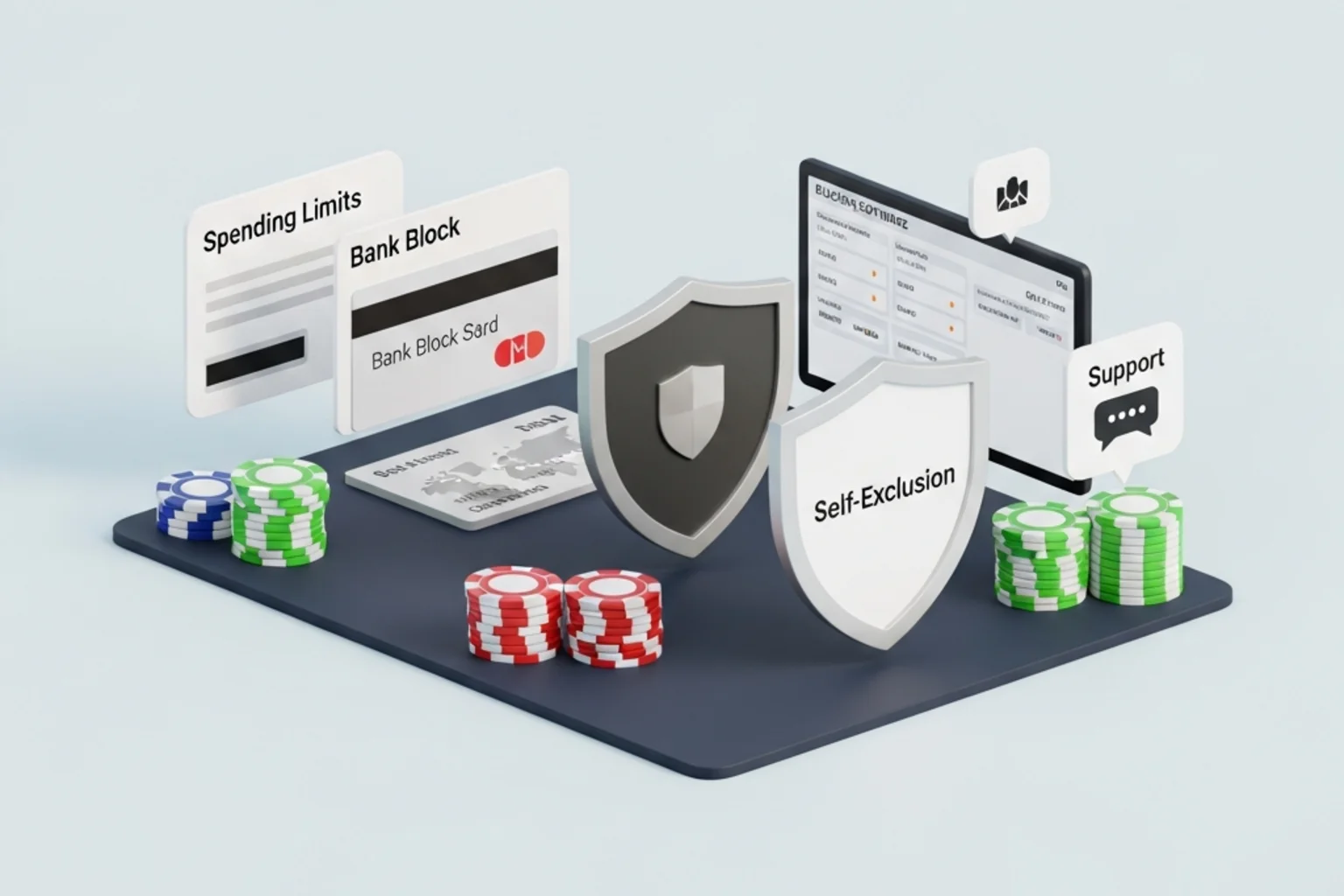
- Setting Gambling Limits and Using Bank Blocking Tools
- Think in layers, not single fixes
- Which protection layer fits this situation?
- Account limits and safer-gambling controls
- GAMSTOP and self-exclusion
- Bank gambling blocks and blocking software
- Where to find verified gambling support
- If a safeguard is already in place
- What this guidance does not do
If you are looking at gambling sites because a limit, block or self-exclusion is already in place, treat that signal seriously. A safeguard is not an obstacle to beat. It is a sign that you, your bank, a gambling business or a support route has already recognised a need for distance, time or control.
This guide organises protection options into practical layers: account limits, self-exclusion, bank gambling blocks, blocking software, support services and healthcare routes. It does not explain how to get around GAMSTOP, bank blocks, identity checks, payment controls, marketing limits or other safeguards. The aim is to help you choose the next safe step when gambling feels harder to control.
Protection works best as layers: account controls, payment blocks, access barriers and human support.
Setting Gambling Limits and Using Bank Blocking Tools
- Understand the GAMSTOP boundary
- Handle money and withdrawal worries carefully
- Check a gambling domain on the official register
Think in layers, not single fixes
No single tool solves every gambling problem. A site limit may slow spending on one account, while a bank gambling block can reduce payment access across more places. Self-exclusion can close off participating gambling businesses for a chosen period. Blocking software can reduce exposure to gambling websites and apps. Support services can help with the behaviour, stress and practical decisions behind the gambling.
Layering matters because gambling harm rarely follows one tidy route. A person may set a deposit limit but then look for another account. A bank block may stop card payments but not address marketing reminders. A self-exclusion may reduce access but still leave debt, anxiety or urges to gamble. Combining tools makes it harder for one weak point to undo the protection.
Use the least risky next step first. If you are calm and simply want better control, set tighter limits and remove marketing prompts. If you are already chasing losses, borrowing or looking for a way around a block, do not search for another gambling route. Add stronger barriers and speak to a support service.
Which protection layer fits this situation?
| Situation | Useful protection layer | Why it helps | What not to do |
|---|---|---|---|
| I am spending more than planned | Deposit, spend or loss limits, plus bank transaction blocks if the pattern continues. | Limits create a boundary before spending grows; bank blocks add distance from payments. | Do not raise limits while upset, bored or trying to recover losses. |
| A block or self-exclusion is already in place | Keep the block in place and add support or blocking software if urges continue. | The existing safeguard is already telling you that access is a risk. | Do not look for sites or payment routes that avoid the safeguard. |
| I need fewer reminders | Turn off marketing where possible, use self-exclusion settings and reduce gambling-related browsing. | Fewer prompts can reduce impulsive decisions and repeated account checks. | Do not keep promotional messages as a reason to return later. |
| I am worried about someone else | Use support services for advice on boundaries, conversations and signposting. | Support can help without forcing the person into a rushed confrontation. | Do not share accusations publicly or handle private account information without care. |
| I need gambling support now | Contact the National Gambling Helpline from GamCare, or use NHS and GambleAware information for further routes. | Human support helps when tools alone are not enough. | Do not keep gambling while waiting for the problem to feel easier on its own. |
Account limits and safer-gambling controls
Remote gambling standards cover financial-limit facilities, including examples such as deposit, spend and loss limits. Limits are useful because they move part of the decision away from the emotional moment of play. A limit set while calm can stop a later decision from being made under pressure, frustration or the hope of recovering losses.
A useful limit is specific, low enough to matter and not treated as a challenge to reach. If you regularly hit a limit and then feel annoyed, the limit may be showing that your spending boundary is still too high or that another layer is needed. If you keep trying to increase a limit, that is a warning sign, not proof that the limit is inconvenient.
Limits are not only about deposits. Depending on the setting and business, the relevant control may relate to spend, loss, session time, account access or marketing. Read the control carefully and check when changes take effect. Do not use a delay or cooling-off period as a reason to open another route elsewhere.
GAMSTOP and self-exclusion
GAMSTOP is an online self-exclusion scheme connected with participating online gambling businesses. Official GAMSTOP and Gambling Commission guidance describe self-exclusion as a protection measure with account and marketing consequences. The detail matters because self-exclusion is not a casual preference button. It is designed to put distance between a person and gambling access.
If self-exclusion is already active, the safer response is to respect it and add support where needed. Looking for sites outside the scheme, trying different account details or trying to bypass checks works against the purpose of the exclusion. It can also expose you to businesses and terms that are harder to verify or complain about.
If you are not self-excluded but feel close to needing it, use that feeling as information. Consider whether lighter limits are enough or whether a stronger barrier is more honest. A person who is chasing losses, hiding spending or gambling with borrowed money may need more than an account setting.
Bank gambling blocks and blocking software
The Gambling Commission’s public guidance treats bank gambling blocks as a way to block gambling transactions. Many people find payment blocks useful because they interrupt the moment when an urge turns into a deposit. A block cannot make every decision for you, but it creates a practical barrier between an impulse and a payment.
Blocking software can add another layer by reducing access to gambling websites and apps. GambleAware describes layered options that include GAMSTOP, blocking software, bank payment blocks and venue self-exclusion. The right mix depends on the pattern: payments, web access, advertising, venue visits or all of them.
Do not treat a block as a test of determination. If you find yourself looking for ways around it, the issue is no longer the block itself. The issue is that the urge to gamble is strong enough to push against a protection. That is the moment to add support, not a new gambling route.
Where to find verified gambling support
GamCare lists the National Gambling Helpline at 0808 8020 133 and states that it is available 24 hours a day, seven days a week. That route can help with gambling worries, practical next steps and support for people affected by someone else’s gambling. NHS information also confirms gambling treatment clinics in England, and GambleAware provides tools and support information around blocking and self-exclusion.
Choose support based on the problem in front of you. If you need to talk through gambling urges or harm, the National Gambling Helpline is a direct route. If gambling is affecting health, debt, relationships or daily life, NHS and specialist treatment information may be relevant, especially in England. If the practical problem is access, payment or reminders, GambleAware’s tools information can help you layer self-exclusion, blocking software and bank blocks.
Support is not a sign that you have failed. It is a way to make the next decision with help rather than pressure. You do not need to wait until everything is severe before speaking to someone. Early contact can stop a small pattern from becoming a larger harm.
If a safeguard is already in place
Use this simple path if you arrived here because a limit, block or exclusion is already active. First, do not remove or work around the safeguard while you are emotionally charged. Second, identify what the safeguard is protecting: spending, time, access, marketing, payment, or all of those. Third, add the missing layer. A self-exclusion may need a bank block. A bank block may need blocking software. A limit may need support if you keep trying to override it.
Fourth, remove pressure points. Delete saved payment details where possible, turn off gambling marketing, avoid keeping promotional messages, and do not keep checking accounts for offers. Fifth, speak to someone if the urge continues. Practical tools are stronger when there is a person or service helping you stay with the decision.
None of these steps requires judging yourself. They are ordinary protection steps for a risky activity that can become hard to control. The safest choice is the one that reduces access, protects money and gives you time to think clearly.
Understanding exactly what not on GamStop means is the first step towards maintaining a safe and controlled gambling environment.
We prioritize player safety and responsible gaming across all the reputable brands featured on Slots No GamStop.
What this guidance does not do
This guidance does not provide medical advice, legal advice or a promise that any single tool will solve a gambling problem. It also does not list gambling sites, payment routes or ways to avoid safeguards. If you are dealing with a money dispute, use the withdrawals and balances guide. If you need to understand what “not on GAMSTOP” means, use the meaning guide. If you simply need help now, contact a verified support route before making another gambling decision.