
 Available in GB
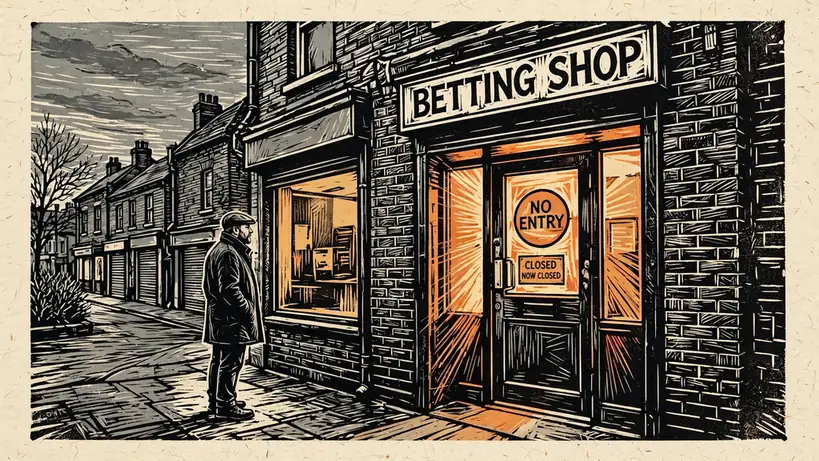
- What ‘Not on GamStop’ Actually Means
- The Legal Line for UK Players and Operators
- What ‘Trusted’ Can—and Can’t—Mean Outside the UKGC
- The Safer-Gambling Tools You May Find
- Crypto Payments: Irreversible Transfers and Volatile Winnings
- Bonus Terms That Change the Real Cost
- Withdrawals, Verification and the Delays to Plan For
- If You’re Comparing Sites for Your Own Circumstances
- How to Read Casino Reviews Without Taking ‘Trusted’ on Faith
- Check the Licence Before You Trust the Claim
These sites sit outside UK Gambling Commission oversight, so GamStop exclusions do not apply and safeguards, payments and terms may differ.
What ‘Not on GamStop’ Actually Means
GamStop is a self-exclusion service for people who want to stop gambling with operators licensed by the UK Gambling Commission. When you register, participating UK-licensed gambling establishments are required to prevent you from gambling with them for the period you selected. In plain terms, it is a shared exclusion system across those operators, not a switch that closes every gambling website on the internet.
The choice of period is six months, one year or five years. Once your exclusion is active, you cannot shorten it or cancel it early. That matters: GamStop is designed to create a firm break, not a temporary pause you can reverse when the urge to gamble returns.
The phrase “casinos not on GamStop” describes a different regulatory boundary. These are casinos operating outside the UK Gambling Commission’s jurisdiction. They are not part of the UK system, so they are not required to apply a GamStop exclusion. They also do not share player data with GamStop or carry out its exclusion measures. Your registration therefore does not automatically prevent you from opening an account with one of them.
That distinction is the whole point of the label. It does not mean GamStop has failed, or that your exclusion has expired. It means the casino sits outside the system that enforces it. If you have chosen self-exclusion because gambling has become difficult to control, using a site beyond that boundary would undermine the break you set up. I would not treat it as a workaround.
Casinos That Bypass GamStop: UK Player Guide
What the exclusion covers
GamStop applies to gambling establishments licensed by the UK Gambling Commission. A registered user is restricted from gambling with those participating operators for the chosen period. It is a practical barrier across the UKGC-licensed side of the market; it is not a universal restriction on every site that might accept a UK visitor.
That difference can be easy to miss when you see a casino described as “not on GamStop”. The wording is about whether the site participates in GamStop, not about whether it has checked your GamStop status and made an exception. A casino outside the UKGC framework is simply outside the system’s reach.
Nor does an exclusion move from one operator to another by magic. GamStop’s role is to apply the self-exclusion across the UK-licensed establishments covered by the service. A casino that does not cooperate with GamStop does not receive that exclusion information through the service and does not enforce the restriction on its behalf. The two systems do not connect in that way.
What the label does not tell you
“Not on GamStop” is a description, not a quality mark. It tells you that a casino is outside GamStop’s UKGC-based exclusion arrangement. By itself, it does not tell you how the site handles accounts, what rules apply there, or whether its protections match those at a UKGC-licensed casino. The label is not an endorsement.
USA Casinos for UK Players: Access and Risks
That is why the word “trusted” needs care when it appears beside the phrase. Someone searching for trusted casinos not on GamStop UK 2026 may be trying to understand the difference between a UK-licensed site and one beyond GamStop. But the important first distinction is not which site sounds reassuring. It is whether the casino is within the system you deliberately joined.
If you registered with GamStop to put distance between yourself and gambling, the fact that another site does not enforce your exclusion is not a reason to use it. It is a sign that the boundary you chose may not cover that site. A neat label does not change what the exclusion was for.
I find it helps to separate two questions: “Does this casino participate in GamStop?” and “Do I want to gamble while my exclusion is active?” The first is about the operator’s place in the system. The second is about your own decision and the reason you registered. They are connected, but they are not the same question.
For anyone considering a self-exclusion, the key point is straightforward: GamStop covers UK Gambling Commission-licensed establishments, while casinos outside that jurisdiction are not required to enforce the registration. The selected period cannot be cut short once it is in force. If you signed up because you needed gambling to stop, treat that commitment as the reason to stay away from sites that fall outside the system—not as a puzzle to get around.
GamStop Coverage UK-licensed operators only
Exclusion Duration 6 months, 1 year, or 5 years
Regulatory Boundary Casinos outside UKGC jurisdiction are not part of the system
That boundary matters.
Top online casinos in the UK
- x3betBonus: Welcome Pack 100% Up to £1.000 + 200 Free Spins · Payout speed: 1-3 business days
- Revery PlayBonus: 100% up to€1,000+ 100 FS · Payout speed: 1-3 business days
- DieselwinBonus: Welcome Pack 250% up to £4000 + 200 FS · Payout speed: 1-3 business days
- SlotoSportBonus: 500% up to £ 10 200+ 777 FS · Payout speed: 1-3 business days
- NightLuckBonus: Welcome Pack + 805% Up To 6400€ + 280 FS · Payout speed: 1-3 business days
- EvoSpinBonus: 125% up to €2500 + 125 Free Spins · Payout speed: 1-3 business days
- ChanzeBonus: Slots Welcome Bonus #1 200% up to €500 · Payout speed: 1-3 business days
- NightWinBonus: £900 + 400 free spins · Payout speed: 1-3 business days
- BritsinoBonus: Welcome Package – Get your £2,200 + 2,000 FS · Payout speed: 1-3 business days
- BeOnBetBonus: 100% up to €500 + 100 FS · Payout speed: 1-3 business days
The Legal Line for UK Players and Operators
There is an important difference between a player placing a bet and a casino taking that player’s business. UK players are not committing a criminal offence simply by using a casino that is not on GamStop. But that does not make the operator’s position lawful: a casino offering online gambling to customers in Great Britain must hold the relevant licence from the UK Gambling Commission (UKGC). An operator serving those customers without one is acting illegally.
That distinction is easy to miss when a site accepts a UK registration or displays familiar games and payment options. Access is not the same as authorisation. A website may be reachable from a British home and still be operating outside the rules that apply to a casino licensed to serve the local market.
For you as a player, the practical point is that the legal responsibility described here falls on the operator, not on you for placing a bet. Still, “not a criminal offence” is a narrow statement. It does not mean that every available site is lawful to operate in Britain, or that you have the protections attached to a UKGC licence. Those are separate questions.
Player access is not operator permission
A casino licensed outside Great Britain may accept registrations from UK players. That possibility does not grant it permission to offer gambling services to people in Britain. The operator’s obligation is tied to the market it serves, not simply to the country where its offices or licence are based.
Casino Sites Not Registered with GamStop in the UK
This matters when you see a site described as a trusted online casino for real-money play in the UK. The wording can make the arrangement sound ordinary, as though the operator has the same standing as a British-licensed casino. It does not establish that. A foreign licence and a UKGC licence are not interchangeable, and a site’s willingness to accept your account does not settle whether it is authorised to serve the market.
I’d keep the two questions separate: can you reach the site, and is the operator licensed to serve customers here? The first may be obvious from the registration page. The second is the one that tells you whether it belongs within the UK regulatory system.
What the difference means for you
A UKGC-licensed operator is subject to the consumer-protection requirements attached to that licence. A casino operating outside that framework does not provide those UKGC protections. That does not, by itself, prove that every foreign-licensed site behaves badly; it means you should not assume that the same rules, oversight or routes for addressing a problem apply.
If a dispute arises, the difference can become more than a technical point. With a site outside the UKGC system, you cannot treat the UK regulator’s licensing framework as though it governs the operator. The word “trusted” in a site’s own marketing, or in a description of an online trusted casino, cannot replace that legal distinction.
I would not read the player’s lack of criminal liability as a recommendation to use such a site. It is simply not the same thing as a regulator approving the operator for the British market. A legal position for the customer and a legal obligation for the business sit on opposite sides of the transaction.
While using a non-GamStop casino is not a criminal offence for a player, an operator offering gambling services to customers in Great Britain without a UKGC licence is acting illegally.
Nor does an operator’s acceptance of British customers make it a UK-licensed casino by implication. A familiar interface, British-facing wording or a claim to serve UK players cannot supply a licence that the operator does not hold. The key distinction is between a casino that is authorised to offer online gambling here and one that is accessible from here but outside the UKGC’s authority.
Read “legal” with care
When people ask whether it is legal to use a casino that is not on GamStop, the short answer about the player is that using the site is not a criminal offence. The operator’s position is different: offering online gambling to customers in Great Britain without the required UKGC licence is unlawful. Both points can be true at once.
So if you are weighing claims about an online casino trusted by British players, do not let the phrasing blur who is being described. “Players can access it” says something about availability. It does not say that the operator is legally entitled to serve the British market, or that the site carries the protections associated with a UKGC licence.
That is the legal line worth keeping in view: the player is not criminalised simply for using a non-GamStop site, but the site’s availability does not make its operator authorised in Great Britain. Access is not approval.
What ‘Trusted’ Can—and Can’t—Mean Outside the UKGC
A licence is a useful clue, but it is not a shortcut to calling a casino trustworthy. When a site points to a regulator outside the UK, that tells you it sits under a different oversight system. It does not mean its rules, enforcement or protections match those attached to a UK Gambling Commission licence. “Licensed” and “equivalent to a UK-licensed casino” are not the same claim.
Foreign Casinos for UK Players: Licensing and Risks
Casinos not on GamStop may hold licences in places such as Malta, Gibraltar or Curaçao. Those are different jurisdictions, not alternative branches of the UKGC. A foreign licence therefore cannot give a site UKGC status, and it does not bring the site into the UK regulator’s framework. That distinction matters more than the wording on a homepage.
I’d treat a licence as context, not a personal endorsement. It may tell you which authority the operator says oversees it; it does not, by itself, show that the experience or recourse available to a UK customer will be the same as at a UKGC-licensed casino. Nor does the word “trusted” settle what happens if you have a dispute. The label is easy to print. Its limits are less visible.
That is especially important for self-exclusion. Casinos licensed outside the UK do not have a legal duty to connect to GamStop. If you have registered with GamStop, do not read the absence of a block as evidence that the site has assessed your circumstances or is suitable for you. It simply means that the UK scheme does not apply there. A way around an exclusion is not a form of protection.
There is a wider consumer-protection gap too. Playing at a casino not on GamStop is not itself a criminal offence for a player, but these sites do not provide the consumer protections that come with a UKGC licence. That is the trade-off hidden by neat phrases such as “internationally licensed” or “trusted casino online”. A foreign regulator’s name can sound reassuring while telling you little about the protections you can actually rely on in Britain.
Malta
One of the different jurisdictions where casinos may hold a licence.
Gibraltar
An alternative regulatory authority to the UKGC.
Curaçao
Another jurisdiction providing licences to offshore operators.
I would be wary of treating all foreign licences as interchangeable, either. Malta, Gibraltar and Curaçao are not one shared authority, and naming one of them does not make every operator under it identical. Without checking the relevant regulator and the operator’s stated status, a badge is just a claim. Even a genuine licence from abroad does not turn the operator into a UKGC-licensed business.
So what can “trusted” reasonably mean in this setting? At most, it can be a claim that needs evidence and careful limits. It cannot honestly mean “protected exactly as you would be under UK rules” merely because a casino displays a foreign licence. It cannot mean that GamStop applies there, or that the site has the same obligations as an operator licensed by the UKGC. Those are separate matters.
The phrase “most trusted online casino sites UK” sounds like it promises a settled answer. There isn’t one in a licence badge alone. A casino may present itself as reliable, but the claim should not be confused with independent assurance or UK-level protection. That may feel less satisfying than a simple ranking. It is also more accurate.
If you are under a GamStop exclusion, the safest interpretation is straightforward: an overseas licence does not cancel that decision or make gambling a sensible next step. The restriction you chose remains in place for its selected period, and a site outside the scheme cannot provide the same UKGC safeguards. Keep those facts separate from marketing language. “Trusted” is not a regulator, and it is not a guarantee.
Non-GamStop European Casinos: UK Rules Explained
The Safer-Gambling Tools You May Find
A casino’s responsible-gambling page can look reassuring, but the key question is whether its controls are required or offered at the operator’s discretion. Casinos not on GamStop sit outside the UK Gambling Commission’s framework, so you should not assume they provide the same protections as a UKGC-licensed site.
A specialist review of non-UK casinos reports that some sites offer deposit limits, loss limits, session timers and reality checks voluntarily. It also notes that some provide reminders and self-exclusion, even where their regulator does not require those measures. Treat that as a description of what may be available, not a promise about every operator. A menu of tools is only useful if the limits are clear, easy to set and actually enforced.
What the controls do
A deposit limit restricts how much you can add to an account over a chosen period. A loss limit is intended to cap losses over the period the site specifies. Check how each is calculated: the label alone does not tell you when the limit resets or what transactions count towards it.
Session limits and reality checks address time spent playing. A session timer may let you set a stopping point; a reality check can interrupt play with a reminder of how long you have been logged in. These prompts can help you notice time passing, but they do not prevent you from continuing if you dismiss them. Read the settings before you rely on them.
Do
- Check if deposit and loss limits are easy to set
- Verify if tools are actually enforced
- Use session timers and reality checks to notice time passing
Don’t
- Assume offshore tools are a substitute for GamStop
- Rely on tools that are only offered at an operator’s discretion
- Dismiss reminders to continue playing
Self-exclusion is different from a reminder: it is meant to block access to that particular operator for a selected period. Do not assume an exclusion on one site will apply to another, or that it links to GamStop. A casino outside the UKGC system does not take part in GamStop’s exclusions, and its own self-exclusion arrangement may have different rules. If you are already excluded through GamStop, an offshore site’s tools are not a substitute or a reason to resume gambling.
Check the practical details
Before opening an account, look for the safer-gambling settings and read what happens after you switch one on. Can you lower a limit straight away? Does raising it take effect immediately, or is there a delay? Can you close a session without having to contact customer support? The answers matter more than a badge or a page headed “responsible gaming”.
Look for a clear way to request self-exclusion and check whether the site explains what happens to access during that period. If the terms are vague, the controls are difficult to find, or support cannot explain them plainly, do not treat the presence of a tool as evidence that it will protect you.
UK-based support services may not be available through a casino not on GamStop. Do not assume that the operator can connect you to the help you would expect from a UKGC-licensed site. If gambling is causing harm, pause rather than relying on an offshore operator’s reminders or limits to manage the problem. Useful controls are a backstop, not a cure.
Crypto Payments: Irreversible Transfers and Volatile Winnings
Crypto can make a payment look like a simple wallet-to-wallet transfer. The important difference is that it is not like a card payment you can ask your bank to reverse. Once a transaction has been confirmed, sending it to the wrong wallet address may mean the funds are lost permanently. Check the address carefully before you approve anything; a small typing mistake can have a large consequence.
There is another detail worth checking: the casino’s instructions must match the cryptocurrency and wallet you are using. If you are unsure whether the details are correct, stop rather than sending a test payment. I would not treat a payment method as trustworthy simply because the transaction appears quickly or the site accepts it.
The value can move while your funds are held. A specialist gambling review has noted that crypto withdrawals may be fast, but the value of winnings can change with cryptocurrency prices. So the amount shown in a wallet is not necessarily worth the same when you later exchange it or spend it. Speed and value are different things.
Before depositing, check whether the casino explains how it handles crypto deposits and withdrawals, including any conversion into another currency. Do not assume that a displayed balance is a fixed cash amount. Keep a record of the transaction details, but remember that a record does not make an irreversible transfer reversible.
Some reporting has described gambling services that accept cryptocurrency without requiring registration or identity checks as a way people may get around GamStop. That is not a safe workaround to recommend. Casinos not on GamStop operate outside the UKGC framework and may lack mandatory responsible-gambling tools; UK-based support services may also not be available through them. If you have self-excluded, using crypto to continue gambling cuts across the purpose of that decision.
Crypto says little on its own about whether a casino is reliable. It changes how money moves and adds risks around irreversible transfers and price swings; it does not remove the need to understand who operates the site or what happens to your funds. A quick transaction is still a financial risk.
Attention Once a cryptocurrency transaction is confirmed, sending it to the wrong wallet address may mean the funds are lost permanently.
Bonus Terms That Change the Real Cost
A bonus is not cash you can simply withdraw. Wagering requirements mean you must place qualifying bets to meet a stated turnover target before bonus winnings can be withdrawn. The multiplier tells you how that target relates to the bonus, but check the terms to see exactly which amount it applies to. That detail changes the calculation.
A specialist review puts typical wagering requirements in the 30x to 40x range and describes anything above 50x as generally predatory. Treat that as a warning, not a universal rule: the full terms matter, and a lower multiplier does not automatically make an offer worthwhile. If the wording is unclear about what must be wagered, I would not count the bonus as usable value.
The game list matters too. Table games may contribute less to wagering than slots, or contribute nothing at all. So a bonus advertised alongside a trusted non-GamStop slots offer may not help if you prefer table games. Check each game’s contribution before playing; a small contribution can make the target much harder to reach than the headline multiplier suggests.
Look for restrictions that change what you can do while the bonus is active. A specialist review notes that terms may set a maximum bet, a deadline for completing wagering, or a cap on withdrawals from bonus winnings. A maximum-bet rule can put winnings at risk if you exceed it, even by accident. A deadline can leave unfinished wagering, while a withdrawal cap can limit the amount you receive after meeting the requirement. Those are not minor footnotes.
I read the bonus terms in this order: what counts towards wagering, which games qualify and at what rate, the permitted bet size, the completion deadline, then any withdrawal cap. If any of those points is hard to find or written ambiguously, pause before accepting the offer. A “best” bonus label cannot tell you whether its conditions fit how you actually play. The arithmetic is the offer.
Withdrawals, Verification and the Delays to Plan For
A withdrawal has two separate stages: the casino’s own processing and the time your payment provider takes to move the money. The distinction matters when you are trying to work out when funds might arrive. A specialist review reports that e-wallet withdrawals are generally faster than card withdrawals, while casino processing may take up to 24 hours. That is a broad comparison, not a promise about a particular account or payment.
Before depositing, read the payment terms for the method you intend to use. Check whether the casino lists separate processing and transfer times, and whether the same method must be used for deposits and withdrawals. If those details are unclear, you cannot sensibly estimate how long a cash-out may take. A pending request is not necessarily the same as a payment already sent.
Complete verification before you need a withdrawal
KYC means identity checks carried out by the operator. A specialist review advises completing verification early, rather than waiting until you request a payout. If checks begin only after you ask to withdraw, the account may need to pass that stage before the request can proceed. Sorting it beforehand can help avoid that preventable hold-up.
Read the account’s verification instructions and make sure you understand what the operator will ask you to provide. Follow the stated process carefully; if anything is unclear, ask the operator before relying on a particular cash-out date. Do not assume that depositing successfully means verification is complete.
Keep the account information and payment details consistent with the operator’s requirements. If a detail needs correcting, it is better to find that out before a withdrawal request is sitting in a queue. Save the confirmation of your request and any replies about its status, so you can refer to the same information if you need to follow up.
These steps can reduce avoidable friction, but they cannot guarantee a particular arrival time. Payment method, operator processing and account checks all affect the wait. A casino’s own terms should take precedence over broad timing claims in reviews.
One important caveat: casinos not on GamStop operate outside the UK Gambling Commission’s framework and may not provide the mandatory protections found at UKGC-licensed sites. UK-based gambling support may also be unavailable through them. For a UK player, those limits matter alongside the mechanics of getting money out.
If You’re Comparing Sites for Your Own Circumstances
I’d start with the parts that can affect you before looking at a welcome offer or a polished homepage. A site can appear to suit your plans and still have limits or conditions that make it a poor fit.
Check what controls are actually available in your account. A specialist review may report that a non-GamStop casino offers deposit or loss limits, session limits and reality checks, but these features are not a legal requirement for such sites. Confirm the details directly with the operator: can you set a limit before depositing, change it later, and find a clear record of your session? Don’t treat a feature mentioned in a review as proof that it will work in the way you expect.
Casino Sites & Safety: Licensing and Access
This matters because casinos not on GamStop operate outside the UK Gambling Commission’s framework. They may lack mandatory responsible-gambling protections, and UK-based support services may not be available to you through the operator. If you are using self-exclusion or gambling is causing harm, comparing sites is not a safe workaround; stick with the exclusion and seek support.
If a bonus is part of your comparison, read the full terms rather than the headline. A specialist review may flag conditions such as a maximum bet while wagering, a deadline for meeting the requirement, or a cap on withdrawals from bonus winnings. Check whether the restrictions suit the way you intend to play. If the wording is unclear, ask the operator to explain it before you accept the offer. A bonus you cannot use on your preferred games, or whose conditions you cannot meet, is not useful value.
Verification is another practical constraint. A specialist review may advise completing KYC checks early to reduce the chance of avoidable delays when withdrawing. Before you deposit, find out what documents the operator asks for and whether your details and payment method can be verified. If you cannot meet its requirements, do not assume you can sort that out later.
I wouldn’t call any one site the most trusted choice for every UK player, whether it is established or newly launched, or advertises a new-user bonus. Your circumstances matter: the limits you need, the terms you accept and the checks you can complete. If any of those are vague, pause. No offer is worth guessing.
How to Read Casino Reviews Without Taking ‘Trusted’ on Faith
A polished review is not proof that a casino will treat you fairly. I look for specifics I can check, not a row of reassuring labels. A useful trusted casino review should say what it examined, when it did so and whether the writer has a commercial relationship with the operator. If a page contains affiliate links or promotional material, that should be made clear.
The licence is a basic detail, not a seal of approval. Reviews may describe a casino as licensed in Malta, Gibraltar or Curaçao; they should identify the jurisdiction rather than leave you with a vague claim of being “fully licensed”. Casinos not on GamStop operate outside the UK Gambling Commission’s framework, and may not have the same mandatory consumer protections. “Trusted” does not make those differences disappear.
Bonuses deserve the same scrutiny. A specialist review may report terms such as a maximum bet while wagering, a deadline to meet the requirements, or a cap on withdrawals from bonus winnings. Check that the review explains these restrictions in plain language, rather than highlighting free spins and leaving the conditions buried. If the terms are not discussed, treat the bonus description as incomplete.
For withdrawals, look for an account of what verification involves and when it can happen. Does the review explain what documents may be requested, whether checks can hold up a payment, and how the operator communicates a delay? A bare claim of “quick payouts” tells you little if the process after a withdrawal request is missing.
I also check whether reviews distinguish casino games from the casino itself. A favourable game review says nothing by itself about account checks, bonus rules or how a complaint is handled. The same goes for bingo coverage: praise for the games is not evidence about payment procedures.
Read trusted casino reviews UK readers can actually use as reports, not guarantees. If the writer skips the terms, verification process or commercial disclosure, the missing detail is the point.
Check the Licence Before You Trust the Claim
A licence badge on a casino page is a claim, not proof. Before treating a site as a licensed, trusted casino, find the regulator named in its terms or footer and check the regulator’s own official register. Search for the operator’s legal name, not just the brand: they may differ. Make sure the register entry matches the site you are looking at and shows a current licence.
For a UKGC-licensed operator, participation in GamStop is required. A casino licensed outside the UK is not legally required to join GamStop. So a foreign licence and GamStop status are separate things; one does not establish the other. A licence from another jurisdiction also does not make a site equivalent to a UKGC-licensed casino.
This matters whether you are looking at a live casino or a site advertising low-wagering bonuses. The licence check tells you who the operator says regulates it; it does not confirm that a bonus is good value or that every claim on the site is reliable. Read the terms separately, and don’t let a polished badge do the checking for you.
If the operator names a regulator, go to that regulator’s official website and use its licence search or register. Compare the registered company details and licence status with the information the casino provides. If you cannot find a matching entry, or the details do not line up, treat the claim as unverified rather than assuming the site is trusted.
A “trusted casino licence” is not a single standard shared across regulators. Check who issued it, confirm the entry at the source, and keep the limits of that licence in view. For UKGC-licensed operators, GamStop participation is part of the requirement. For casinos licensed elsewhere, it is not. That distinction is worth checking before you believe any broader promise about trust.
Are casinos that bypass GamStop illegal for UK players to use?
No, using a non-GamStop casino is not a criminal offence for you. However, an operator offering online gambling to people in Great Britain without a UK Gambling Commission licence is acting illegally.
What gambling sites are not on GamStop?
They are casinos outside the UK Gambling Commission’s jurisdiction, so they do not participate in GamStop. Some may be licensed in places such as Malta, Gibraltar or Curaçao.
How does Gamstop work?
You choose a self-exclusion period of six months, one year or five years, and participating UK Gambling Commission-licensed operators must prevent you from gambling with them during that time. You cannot shorten or cancel the exclusion before the selected period ends.
What exactly does GamStop block?
It blocks registered users from gambling with participating operators licensed by the UK Gambling Commission. It does not cover casinos outside that system.
What’s the fastest way to get my winnings out?
E-wallet withdrawals are generally faster than card withdrawals, and casino processing can take up to 24 hours. Completing KYC verification early can help avoid delays.
Is it safe to play at non-GamStop gambling sites?
Not necessarily: these sites do not provide the consumer protections associated with a UK Gambling Commission licence. Some may offer limits, self-exclusion and reminders, but these safeguards may be voluntary.
What are casinos not on GamStop?
They are casinos outside the UK Gambling Commission’s regulatory reach and are not required to enforce GamStop exclusions. They do not share player data with GamStop.