
 Available in GB
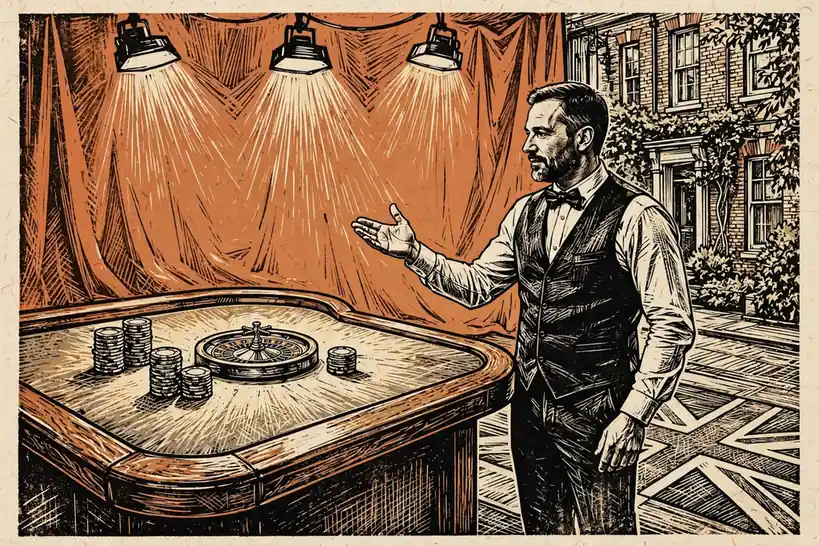
The category spans casino entertainment and televised-show formats, while naming, operators and UK regulation shape what listings mean.
Live Casino Game Shows: What This Page Covers
The phrase “live casino game show” sits between two familiar ideas: casino play and televised entertainment. That combination is why people use it to describe a distinct corner of online casinos, rather than simply searching for a general casino game or a conventional show. If you are trying to understand what the category includes, compare it with other kinds of casino entertainment, or decide which details matter before you spend time looking around, it helps to start with the label itself.
The wording can be slippery. “Live” may be the part that catches your attention; “game show” may be the part you want to understand; and “casino” may suggest that the experience belongs within an online gambling site. Put together, the words describe a type of casino entertainment people look for under several different names. They do not, by themselves, tell you what a particular offering looks like, how it works, or whether it will suit you. A label is a starting point, not a full description.
That distinction matters because the category is easy to oversimplify. It is tempting to assume that every result carrying the same broad label will offer the same experience. I would not make that leap. A shared category name can help you find related material, but it does not settle the details of any individual title or casino. Those details belong to the particular offering, and they are what you would need to examine before forming a view.
What people mean by the category
At its broadest, the term points to casino entertainment presented in a game-show style and associated with a live online setting. Readers may arrive with different expectations: one person is looking for entertainment that feels unlike a standard casino game, while another wants to find a particular title or understand how this kind of content is grouped on a casino site. Both are recognisable starting points, but they are not quite the same task.
Slots at UK Online Casinos: Games and Providers
There is also a difference between asking about the category and asking about an individual product. “Live casino game shows” is a broad description; a named title is a narrower subject. The broad phrase can help you get your bearings, while a title-specific search is about finding information on one particular offering. It is worth keeping those levels separate. Otherwise, general comments about the category can sound like promises about every title within it.
The same caution applies to the phrase “best.” People use it when they want help narrowing a large field, but it does not identify what they personally value. One reader might care most about the presentation; another might be focused on the way a title fits into a casino’s wider selection; someone else may simply want to know where to begin. Without a clear standard, a ranking can look definite while answering a different question from the one you had in mind.
So, before treating any recommendation as useful, decide what “best” means for you. Are you looking for a particular sort of entertainment, a title you have already heard about, or a clearer sense of the category? Those are different aims. A list that serves one may not help much with another. There is no magic adjective that does the sorting for you.
Why the wording varies
People describe the subject in several ways: live casino shows, casino game shows, online game shows, or live game-show entertainment within a casino. The phrasing changes, but the broad interest is often similar. Someone may be trying to discover the category; someone else may already know what they want and be checking whether it appears in an online casino context. The wording alone does not tell you how much the person already knows.
That variation can make browsing feel less straightforward than it should. A broad phrase may lead to general explanations, while a more specific one may bring up a title or a particular casino. Neither kind of result automatically answers the other question. If you want to understand the category, a page focused on one title may be too narrow. If you are looking for a particular title, a general overview may not give you the detail you came for.
Three levels of interest
First, there is category-level curiosity: what people mean when they talk about casino game shows. Second, there is title-level interest: information about a named offering. Third, there is casino-level interest: whether a particular casino includes the kind of content you are looking for.
I find it useful to separate three kinds of interest. First, there is category-level curiosity: what people mean when they talk about casino game shows. Second, there is title-level interest: information about a named offering. Third, there is casino-level interest: whether a particular casino includes the kind of content you are looking for. Those questions can overlap, but they are not interchangeable. Keeping them apart makes it easier to judge whether a piece of information is actually relevant.
There is a fourth kind, too: people who are not sure which question they have yet. They have heard a phrase, seen a category label, or come across a mention and want to get oriented before going further. That is a perfectly sensible place to start. You do not need to arrive with a precise title in mind; you do need to notice when broad information stops being enough for the decision you are trying to make.
What a category label can and cannot tell you
A category label is useful as a signpost. It can tell you the general area a casino or a description is talking about. It cannot, on its own, tell you what you will see, what choices will be available, or how an individual offering is structured. Those are details to check in the specific description rather than infer from a broad heading.
This is a small distinction with practical consequences. If a casino groups something under a game-show label, that tells you how it has chosen to present or organise the content. It does not guarantee that all other casinos use the same label in the same way. Nor does a general article about the subject establish that a specific title is available wherever you happen to look. The names attached to a category are not a substitute for checking the particular item.
Best Online Casinos With No Limits in the UK
It is also wise to separate entertainment language from information about the product itself. Words such as “show,” “live,” and “best” can make a description sound immediately clear, but each can leave important questions open. “Show” tells you something about the intended style, not every part of the experience. “Live” signals the broad kind of setting people are seeking, but it does not answer every question about how a specific offering is delivered. And “best” is a judgement whose usefulness depends on the criteria behind it.
That does not make the labels pointless. It means they work best as a first filter. Use them to identify the general subject, then look for detail at the level that matches your interest. If you are comparing categories, stay with category-level information. If you are considering a named title, check information about that title. If your question is about a casino’s catalogue, look at the casino’s own current presentation. Mixing those levels is where confident-sounding but unhelpful answers tend to appear.
A sensible way to frame your interest
If you are new to this area, begin by naming the thing you want to understand. It sounds obvious, but it saves time. “I want to know what this category means” is not the same as “I want details about a specific title,” and neither is the same as “I want to know whether a casino has this kind of content.” Once you have that distinction clear, it becomes easier to judge whether the information in front of you is answering your question or merely sharing a few of the same words.
DO
- Name the specific thing you want to understand
- Determine if you need category, title, or casino-level info
- Check the scope of a description
DON’T
- Assume a broad label guarantees a specific experience
- Accept a ranking without knowing its criteria
- Mix different levels of information
If you are comparing descriptions, pay attention to their scope. Is the writer talking about live casino game shows generally, or about one particular offering? Is the statement about a category, an individual title, or a casino’s own selection? That is often more useful than a bold headline. When a description moves from a broad category to a specific claim, you should be able to tell which level it is discussing.
You can also ask what kind of decision you are trying to make. Some readers are simply exploring and want a plain explanation of the term. Others are trying to shortlist options. Others are checking whether a phrase they have seen refers to the same general subject they already had in mind. The more concrete your question, the more specific the information you need. A general introduction can help with orientation, but it is not a replacement for details about an individual offering.
For readers looking for a “best” option, the first useful step is not to accept a ranking at face value. It is to work out what the ranking measures. Does it explain the basis for its judgement, or does it simply apply a strong label? Does it discuss the category as a whole or focus on selected titles? Does its description match the kind of information you need? If those points are unclear, the ranking may be less helpful than it looks. A neat list is not the same thing as a useful comparison.
Keeping expectations in proportion
There is nothing wrong with arriving with an expectation. The phrase itself points towards an overlap between casino entertainment and game-show presentation, so it is natural to want to know what that means in practice. The sensible move is to keep the expectation broad until you are looking at details for a particular offering. That leaves room for differences without assuming that every item in the category follows a single template.
I would treat general descriptions as orientation, not as guarantees. They can help you understand why a title or section has been grouped under this heading. They cannot establish every feature of every item, and they should not be read as if one example stands for the whole category. The individual description is where specific claims need to be judged.
Amatic Casinos in the UK: Games and Operator Checks
Likewise, a casino’s category menu is a guide to how that casino organises its content, not a universal dictionary. One label may be broad, another more specific; two sites may arrange related material differently. If you are unsure whether a particular title belongs to the area you mean, use the description of that title rather than relying only on the menu heading. A little care here is less exciting than a confident guess. It is also more useful.
The aim is to make the subject easier to approach without pretending that one phrase answers everything. “Live casino game shows” gives you a sensible starting point for exploring this kind of online casino entertainment. From there, the right next question depends on what brought you here: understanding the category, learning about a particular title, or checking what a casino offers. Keep those questions distinct and you are less likely to mistake a broad label for a specific answer.
Best Barcrest Online Casinos in the UK
Top online casinos in the UK
- x3betBonus: Welcome Pack 100% Up to £1.000 + 200 Free Spins · Payout speed: 1-3 business days
- Revery PlayBonus: 100% up to€1,000+ 100 FS · Payout speed: 1-3 business days
- DieselwinBonus: Welcome Pack 250% up to £4000 + 200 FS · Payout speed: 1-3 business days
- SlotoSportBonus: 500% up to £ 10 200+ 777 FS · Payout speed: 1-3 business days
- NightLuckBonus: Welcome Pack + 805% Up To 6400€ + 280 FS · Payout speed: 1-3 business days
- EvoSpinBonus: 125% up to €2500 + 125 Free Spins · Payout speed: 1-3 business days
- ChanzeBonus: Slots Welcome Bonus #1 200% up to €500 · Payout speed: 1-3 business days
- NightWinBonus: £900 + 400 free spins · Payout speed: 1-3 business days
- BritsinoBonus: Welcome Package – Get your £2,200 + 2,000 FS · Payout speed: 1-3 business days
- BeOnBetBonus: 100% up to €500 + 100 FS · Payout speed: 1-3 business days
UK Regulation and Casino Operators
When you look at a casino offering live game shows, the first useful distinction is between the entertainment on screen and the business accepting your custom. The UK Gambling Commission, commonly called the UKGC, regulates gambling activity in the United Kingdom, including online casinos. It is the regulator for commercial gambling in Great Britain, and it issues UKGC licences to businesses and personal licences to individuals working in the industry.
That framework matters even when a service is delivered remotely. A gambling business does not avoid UK regulation simply because its servers or other key equipment are somewhere else. The Commission’s remit covers remote gambling offered to consumers in Great Britain, wherever the equipment supporting it is located. For you, the practical question is not where a platform’s technology sits. It is whether the business offering the gambling is authorised to serve the relevant market.
The distinction between a business licence and a personal licence is worth keeping in mind. An operating licence is held by a business. A personal licence applies to an individual operating in the industry. They are different permissions, attached to different parties, rather than two names for the same approval. If you are checking who is responsible for a casino service, the business behind it is the key starting point; the Commission’s licensing system also covers individuals whose roles require personal licensing.
Amatic Games at UK Online Casinos: What to Know
What the regulator covers
The UKGC regulates gambling activity, not merely the physical location of a casino or the equipment used to deliver it. That includes remote gambling offered to people in Great Britain. A website may be run from outside the country, but that fact alone does not place its offer beyond the Commission’s reach when it is selling remote gambling to British consumers.
This is a useful point to remember when comparing online casinos with live game shows. A polished site, familiar branding or a live broadcast does not tell you which regulator is responsible. The relevant issue is the gambling business making the offer and whether it holds the right UKGC licence. The operator’s location and the location of its technical equipment are not substitutes for that check.
People often use “UK casino” loosely to mean a site they can reach from the UK. That wording can blur an important difference. The UKGC’s role in remote gambling is tied to consumers in Great Britain, and a business serving that market must be considered within that regulatory framework even if it is based elsewhere. Accessibility by itself is not the same thing as authorisation.
For commercial gambling in Great Britain, the Commission is the sole regulator. That gives the UKGC a central role in the market rather than making it one of several commercial gambling regulators competing over the same ground. Its remit includes online casinos, so live game-show content offered as part of remote gambling sits within the broader regulated activity of the operator that provides it.
The safest way to read a casino’s regulatory claims is to separate a named regulator from general language about being “licensed” or “regulated”. Those words only tell you something useful when they identify an authority and apply to the business offering gambling to you. In this market, the relevant term is a UKGC licence. A broad statement on a site should not be treated as proof unless it makes clear that the operator itself is covered.
UK Regulation
The UK Gambling Commission (UKGC) regulates commercial gambling in Great Britain, including remote gambling offered to consumers in that market.
The operator is the business to check
A casino operator is the business that offers gambling to customers. It is not the same thing as a presenter, a studio, a software supplier or a brand used to package the entertainment. Those parties may be involved in what appears on screen, but the licensing question for a player begins with the operator accepting the customer.
That distinction is easy to lose when the live element is prominent. The show may occupy most of the screen, while the operator’s name sits in a menu or footer. But the entertainment format does not change who is making the gambling offer. When you assess an online casino with live game shows, look for the business behind the account and the UKGC licence attached to that business.
A licence is not a general badge that automatically covers every company associated with a site. The Commission issues operating licences to businesses and personal licences to individuals. So a licence belonging to one party should not casually be read as covering another. The operator’s identity matters; a recognisable brand alone is not the same thing as identifying the licensed business.
There is also a difference between regulation of gambling activity and approval of every detail a customer sees. The key point here is the Commission’s role over commercial gambling and remote gambling offered to Great Britain consumers. A casino’s presentation may change, and its entertainment can be supplied through different arrangements, but the operator’s place in the regulated market remains the central consideration.
Amatic Slots in UK Online Casinos: What to Check
That is why I would start with the operator rather than the most eye-catching part of the lobby. If the site highlights its live content but makes its business identity hard to find, you are looking at the wrong end of the question. Work out who is offering the gambling first. Then consider whether that business has the relevant UKGC licence.
Great Britain and the wider UK wording
The word “UK” is common in casino advertising and everyday conversation, but legal wording can be more precise. The Commission regulates gambling activity in the United Kingdom, including online casinos, and it is the sole regulator for commercial gambling in Great Britain. Its remote-gambling remit specifically concerns offers made to consumers in Great Britain.
The Gambling Act 2005 applies to gambling in England, Scotland and Wales. Northern Ireland is outside that Act’s coverage. That distinction is one reason not to treat “UK” and “Great Britain” as interchangeable in every regulatory sentence. Great Britain means England, Scotland and Wales; the United Kingdom also includes Northern Ireland.
For someone comparing casino sites, this does not need to become a geography exercise. It simply helps explain why the wording around a licence may refer to Great Britain, even when a page uses “UK” in its general description. The Commission’s remit over remote gambling is clear for consumers in Great Britain, regardless of where the key equipment is located.
If you are in Great Britain and a casino is offering you remote gambling, the operator needs the relevant UKGC licence. A business cannot make that requirement disappear by describing itself as international or by locating its equipment in another country. The question remains whether it is offering gambling to consumers in the market the Commission regulates.
Check the Operator
- Identify the business holding the UKGC licence
- Confirm the licence is an operating licence for the business
- Distinguish the operator from presenters or software suppliers
This also helps separate a company’s place of incorporation from its regulatory position. Where a company is based and whether it is authorised to offer gambling in Great Britain are different matters. A foreign base does not, on its own, settle the licensing question either way. The Commission’s stated remit is based on the remote gambling offer to consumers in Great Britain, not just the address of the equipment.
What a licence tells you
A UKGC licence places the operator within the British regulatory framework for the gambling activity it offers. It is not a promise about whether you will enjoy a particular show, nor a ranking of one casino above another. It answers a narrower question: whether the business has the relevant authorisation to offer gambling in the market.
That is a more useful test than relying on design, slogans or the presence of familiar entertainment. An attractive interface can be built for a business with very different regulatory status from another site that looks much the same. The screen does not establish the licence. The operator’s regulatory position does.
It is also worth being precise about whose permission you are seeing. A personal licence is issued to an individual; an operating licence is issued to a business. For a consumer deciding whether a casino is authorised to take part in the market, the operating licence is the one attached to the company offering the service. Personal licensing is part of the wider system, but it is not a replacement for the business licence.
Nor should you assume that a statement about one company covers a group of brands or related businesses. The identity of the licensed business matters. If a casino brand is operated by a different legal entity from the name most visible on the page, the distinction is relevant. It is the operator offering the gambling, rather than a loosely associated name, that belongs at the centre of your check.
This is why “licensed somewhere” is not enough when you are considering a casino aimed at British players. The relevant authorisation is a UKGC licence for the business offering the gambling. A regulator in another country is not the same as the UKGC, and a location overseas does not change the Commission’s remit over remote gambling offered to Great Britain consumers.
Betsoft Online Casinos in the UK: Provider Check
Reading casino claims without overcomplicating them
You do not need to decode every technical detail of a live casino page to understand the basic regulatory position. Start with three points: the UKGC regulates gambling activity, its remote remit reaches offers to consumers in Great Britain regardless of equipment location, and it issues operating licences to businesses as well as personal licences to individuals.
For online casinos with live game shows, those points keep the focus on the right party. The show’s format may be the reason you visit, but the operator is the business whose licence matters to the gambling offer. If a site describes itself as regulated, identify the regulator and the business covered by the claim rather than treating the wording as a general assurance.
The Commission’s role is also not limited to venues you can walk into. Remote gambling is within its remit, which is why an online casino cannot claim that the absence of a physical premises takes it outside the system. A service delivered through a website remains remote gambling when it is offered to consumers in Great Britain.
There is no need to infer the operator’s status from where a broadcast originates, where a studio is based or where a server is hosted. Those details do not displace the central rule about the remote offer. The UKGC regulates that offer to Great Britain consumers regardless of the location of key equipment. Keep the test simple.
“Best live game shows casinos” can sound like a question about content, but the regulatory starting point is not a contest between shows. A site’s licence does not make its entertainment objectively better, and a popular format does not establish that its operator is authorised. These are separate questions. First identify the business and its licence; then make any choices about content on their own terms.
That separation is useful because a casino page can place several names side by side: the consumer brand, the operating company, a supplier and perhaps an individual associated with the service. The Commission’s licensing system recognises more than one kind of licence, but that does not make the names interchangeable. A business operating the casino and an individual holding a personal licence are different licence holders with different roles.
BGaming Online Casinos UK: Amatic vs BGaming
The concise version is this: for commercial gambling in Great Britain, the UKGC is the regulator; it covers remote gambling offered to consumers there even when the key equipment is elsewhere; and it licences both businesses and relevant individuals. When you look at a live casino, keep the operator in view. The screen can be busy. The licensing question is not.
Searching for Crazy Time and Funky Time
If you have Crazy Time or Funky Time in mind, start with the exact title rather than assuming that a similar label in a casino lobby is the same product. A name can help you locate a listing; by itself, it does not tell you what the game contains, who supplies it, or whether it is currently available to you.
That distinction matters when you are looking for a live casino game show. The words “live” and “game show” describe the kind of experience you have in mind, but they are not proof that a particular result matches it. Read the title and the category shown on the casino’s own page together. If the listing does not make clear which product it is, do not fill in the gaps from a search result, an old screenshot or a discussion elsewhere.
I would treat the two names separately. Finding information about Crazy Time does not establish anything about Funky Time, and the reverse is just as true. Similar wording is not enough to assume that two listings have the same provider, rules, format or availability. Check each title on its own terms.
What to check on a title page
Before opening a game or deciding that you have found the right one, look at the information the operator displays alongside the title. The page should let you identify the product rather than leave you guessing from a thumbnail or a shortened label. If details are unclear, the operator’s customer support is the sensible place to ask; another casino’s description may refer to a different version or listing.
Title Accuracy
Attention Do not rely on a general description of a similarly named game to explain the one in front of you, as small differences in a listing can matter.
Pay attention to the game’s own instructions once you reach its page. They are the place to read the rules and understand what the buttons and on-screen information mean. Do not rely on a general description of a similarly named game to explain the one in front of you. Small differences in a listing can matter, and a familiar title does not remove the need to read the information supplied with that particular product.
It is also worth checking whether the game is presented as a live product or appears under another casino category. A casino lobby is arranged by the operator, so a label or menu placement is not a reliable substitute for the game’s own description. If you cannot tell whether the listing matches what you wanted, stop there and confirm it before playing. No need to guess.
Availability is not the same as recognition
A title may be familiar without being present in every casino. An operator’s catalogue can change, and a name mentioned in an article, forum post or video does not show that the same game is available in your account now. Check the casino’s current lobby directly, using the full title where its search function allows it. If nothing appears, that is not a reason to assume that a near-match is the same game.
Be just as careful with pages that promise to lead you straight to a title. Check that the destination belongs to the casino you intend to use and that the title displayed there matches the one you wanted. A page about a game is not necessarily the game itself, and a promotional image is not confirmation that the product is currently listed.
Amatic and NetGame Slots at UK Online Casinos
You may also see people describe a game in ways that make it sound interchangeable with another. Treat those descriptions as someone’s account, not as a substitute for the operator’s current listing and the game’s own instructions. I would rather spend a moment checking the page than discover halfway through that I opened the wrong product.
Keep the decision narrow
When you are comparing Crazy Time and Funky Time, compare only what you can confirm from the listings in front of you. Look at the exact names, the operator’s descriptions and the instructions available for each game. If one page gives less information than the other, that does not prove the products are alike; it simply gives you less to work with.
There is no need to turn a title search into a recommendation. Whether either game suits you depends on what you see in its own presentation and whether you are comfortable with its rules. If the details are missing or confusing, leave it unopened until you can clarify them. A recognisable name is a starting point, not a reason to deposit or play.
Keep your expectations modest, too. A result using the words “Crazy Time” or “Funky Time” may discuss the title without offering it, while a casino listing may use a shortened label. Check the actual product page and its instructions before relying on either. That is the cleanest way to tell whether you have found the particular game you meant.
Finding Live Casino Game Shows
If you are looking for a live casino game show, start with the casino’s own game catalogue rather than assuming that the label tells you exactly what is available. Operators organise their lobbies differently, and a title may be grouped under a category, shown in search results or absent altogether. The practical point is simple: check the current catalogue of the site you intend to use.
Main conclusions
- Check the current catalogue of the site you intend to use to confirm availability.
- Verify the operator holds a relevant UKGC licence for the British market.
- Read the specific game rules and terms rather than relying on category labels.
- Use the Gambling Commission’s public register to confirm an operator’s status.
I would also separate the type of experience you want from the words used to describe it. “Live game show” can be a broad label, not a guarantee about a particular title, presentation or set of rules. Before you open a game, read its information panel and rules. That is where you can check what the game involves and what its terms say, instead of relying on a category name or a short description.
Check the casino’s own information
A third-party page can help you understand the terms people use, but it cannot confirm what is in a casino lobby today. Availability can differ between operators and may change. If you have a particular game in mind, use the operator’s search or browse its current catalogue; if the listing is unclear, ask the operator’s customer support before depositing.
The distinction matters because a software supplier and a casino operator are not the same business. Amatic Industries, for instance, supplies games to operators and does not run a consumer-facing casino. Its UK Gambling Software (Remote) licence is permission to supply software, not a licence for players to deposit with the supplier. The operator is responsible for the customer account and the terms attached to it. So if you are checking a casino, look at the operator, not just the name of a provider or studio shown alongside a game.
That is a useful habit even when you are browsing game-show categories. A listing is not a promise that every game from a named provider is available, nor that a game will remain in the lobby. Check the live catalogue and the game’s own information before you make a decision.
Know what you are choosing
A search for a live casino game show may lead you to pages using similar wording for different things. Don’t treat the phrase alone as a full description. Look for the title, the rules and any details the operator provides about how participation works. If you cannot tell what a game offers before opening it, pause rather than filling in the blanks from the category label.
New Online Casino Sites in the UK: Amatic Games
You can also decide in advance what would make a game worth your time: perhaps the format, the pace, or simply whether the rules make sense to you. Those are personal preferences, not qualities that can be reliably inferred from a broad label. A clear description matters more than a bold lobby tile.
For a real-money game, keep the operator in view as well. In Great Britain, operators offering remote gambling to consumers must hold the relevant UKGC licence, regardless of where their key equipment is located. A supplier’s licence does not replace the operator’s. If you want to confirm the business behind a site, use the Gambling Commission’s public register rather than relying only on a logo or a search result.
Before you play
Read the terms attached to the game and the casino account. Check how the operator explains deposits, withdrawals, bonuses and customer support, and set a financial limit before your first deposit. UKGC-licensed operators must prompt customers to set a financial limit at that point, and a request to lower a limit must be actioned immediately. A bonus can also come with conditions; the UKGC’s wagering cap on bonus funds is ten times the bonus amount.
If you are comparing several sites, keep the comparison narrow. Is the game actually listed? Can you find its rules? Is the operator identifiable and licensed for the British market? Those checks answer more than a generic “best” label can. I would not choose a casino simply because a page says it has a live game show; the current listing and the operator’s own terms are what you need to assess.
If gambling stops feeling manageable, GamStop is the national self-exclusion scheme for customers of UK-licensed online operators. It is worth knowing about before you need it. A little checking up front is less glamorous than a spinning lobby, but it is more useful.
What is the new UK slots stake limit, and how does it affect Amatic games?
The limit applies to Amatic online slots: £5 per game cycle for players aged 25 and over from 9 April 2025, and £2 for players aged 18 to 24 from 21 May 2025.
Must a casino be Gambling Commission-licensed to offer Amatic slots to UK players?
Yes. You should play Amatic slots through a UK Gambling Commission-licensed casino; Amatic supplies the software but does not operate the casino or take your bets.
Which licensed UK casinos carry Amatic slots?
Reported operators include Betfred, Jackpotjoy, William Hill, kwiff, PokerStars, Ladbrokes, Paddy Power, Unibet, Virgin Games, Casumo, Sky Vegas, 32Red, 888casino, Bet365, Betway, Betvictor and Betfair. Check each casino’s current game list before depositing, as availability can vary.
What is the maximum I can stake on Amatic slots in the UK?
You can stake up to £5 per game cycle if you are aged 25 or over, or £2 if you are aged 18 to 24.
Are Amatic games licensed and legal to play in the UK?
Yes. Amatic Industries holds a UK Gambling Commission remote software licence, and you can play its games through UKGC-licensed casino operators.